




PiPal Leaf Dragonfly
Price: Rs. 1,399.00
Where Indian heritage finds a contemporary home
There are some pieces of art that simply decorate a space. And then there are pieces that carry a story – of skilled hands, enduring traditions and the visual language of a legacy passed down through generations.
Fitoorr Timber Trap Metal Work brings together the distinctive character of India’s Dhokra metal-casting tradition with delicate patterns inspired by the rich vocabulary of Madhubani art. Intricately worked metal motifs at the heart and around them, hand-drawn borders, layered patterns and a vibrant palette of reds, yellows, greens and deep blacks create a striking contemporary expression. Touches of natural jute fibre add an earthy warmth.
The result is art that feels rooted yet refreshingly modern – designed to be admired and to become a part of the spaces we live in. Displayed together as a collection, arranged as a gallery wall, or placed individually on a console, table or shelf, these pieces bring the quiet presence of Indian craftsmanship into contemporary interiors. Each one carries its own personality, making it equally at home as a statement accent or as a thoughtful gift.
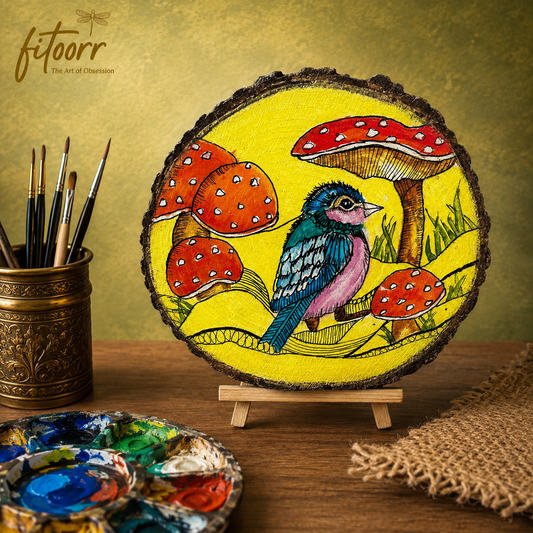
Alongside this, Fitoorr Nature Traces turns to the natural world – birds, foliage, flowers and serene landscapes emerge through fine expressive lines, inviting the eye to linger over the rhythm of a feather, the curl of a leaf or the geometry of a bloom. A warm and cheerful palette of colours and playful accents give the collection an uplifting spirit and an intimate sense of calm. Nature Traces brings a gentle connection to the outdoors into everyday living. It’s quietly conforting about seeing birds and botanicals become a part of our interiors – a reminder to pause, breather and notice the beauty around us.
Together, these collections celebrate the richness of our heritage and the poetry of nature.
Fitoorr – bringing legacy and the language of nature into the spaces we call home.

